Introduction
Our team once switched project management tools three times in one year because we kept picking software built for teams five times our size. If you’re running a small team and drowning in options, finding the best project management software doesn’t need to be complicated. Most small teams need three things done well — task tracking, deadlines, and simple communication — not fifty features you’ll never touch.
What Small Teams Actually Need vs Enterprise Features
Direct answer: small teams generally need clear task assignment, visual progress tracking, and basic deadline reminders — not the complex resource allocation, advanced reporting, and enterprise-level permission systems built for teams of hundreds. Overpaying for unused enterprise features is a common, avoidable mistake.
I’ve seen this play out repeatedly — small teams paying for tiers designed for organizations twenty times their size.
Task Boards and Visual Organization
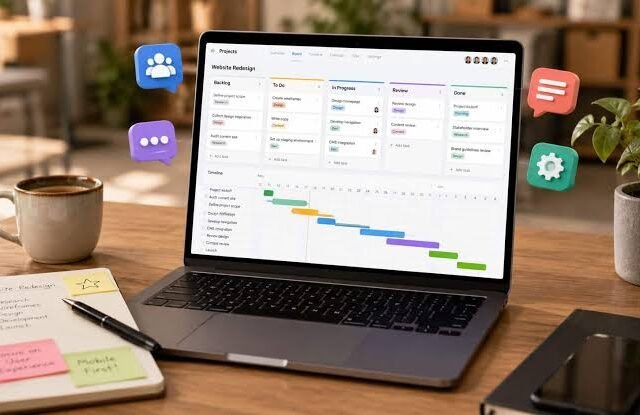
Visual task boards (the classic column-based layout) remain genuinely one of the most intuitive ways for small teams to track work without a steep learning curve.
- Easy to see what’s in progress, what’s stuck, and what’s done at a glance
- Works well for both simple to-do tracking and more structured workflows
- Most team members pick this up within minutes, without formal training
Picture a five-person marketing team seeing exactly where every campaign stands without a single status-update meeting.
Deadline and Reminder Systems
This sounds basic, but poor deadline tracking is where a surprising number of small teams actually fail. The right software makes deadlines visible and hard to accidentally ignore.
[link to related guide about best productivity apps for remote work here]
- Automated reminders reduce the need for constant manual follow-up
- Calendar integration prevents deadlines from existing only inside the project tool
- Overdue task highlighting keeps priorities visible without extra effort
Communication Built Into the Workflow
Switching constantly between a project tool and a separate chat app creates friction. The better tools now build lightweight communication directly into tasks.
Numbers worth noting: teams using tools with integrated task-level comments report noticeably fewer miscommunications compared to relying solely on separate email threads, according to several workplace productivity surveys.
Pricing Models That Actually Fit Small Teams
Watch for pricing that scales fairly rather than punishing small teams disproportionately.
- Per-user pricing can add up fast even for teams under ten people
- Flat-rate small-team plans are often more cost-effective at this size
- Free tiers are genuinely usable for many small teams before any upgrade becomes necessary
[link to related guide about free software alternatives here]
Integration With Tools You Already Use
Nobody wants to manually copy information between five different apps. Check whether project management software integrates with tools your team already relies on daily.
- Calendar and email integration reduces double-entry work significantly
- File storage integration keeps documents linked directly to relevant tasks
- Automation between tools saves real time on repetitive administrative work
Mobile Access Matters More Than It Used To
With more people working partly remote or on the move, checking and updating tasks from a phone genuinely matters now, not as a nice extra but as a core requirement.
I once missed an urgent deadline update simply because I couldn’t check the tool properly from my phone during a commute — that experience changed what I prioritize now.
Common Mistakes Small Teams Make Choosing Tools
- Picking tools built for enterprise scale, leading to unnecessary complexity
- Switching tools too frequently, which disrupts team habits and adoption
- Ignoring actual team feedback in favor of whatever tool leadership prefers personally
[link to related guide about cloud computing basics here]
Suggested image alt text: “Small team collaborating around a laptop showing a project management task board”
FAQ
Q: What’s the best project management software for a team of five people? A: Tools with simple visual task boards and flat-rate small-team pricing tend to work best, avoiding unnecessary enterprise complexity.
Q: Is free project management software good enough for small teams? A: Often yes, especially for teams under ten people with straightforward workflows and moderate task volume.
Q: How important is mobile access for project management tools? A: Increasingly important, particularly for teams with any remote or hybrid work arrangement.
Q: Should small teams avoid enterprise-focused software entirely? A: Generally yes, since enterprise tools often introduce unnecessary complexity and cost disproportionate to a small team’s actual needs.
Q: How often should a small team reevaluate its project management tool? A: Roughly once a year is reasonable — frequent switching disrupts adoption more than it solves genuine problems.
Conclusion
Finding the best project management software for a small team comes down to matching actual needs, not chasing every available feature. Prioritize simplicity, fair pricing, and genuine team adoption over an impressive-looking feature list nobody ends up using. What’s the one workflow problem your team keeps running into? Start your search by solving that specific issue.
Introduction
For years I assumed decent photo editing required an expensive subscription. Then I actually tested a handful of free apps side by side against what I was paying for, and honestly felt a little silly. If you’re looking for the best free photo editing apps without compromising much on quality, this covers what genuinely works — for casual edits, social media content, and even more serious creative projects.
What Free Photo Apps Can Actually Do Now
Direct answer: the best free photo editing apps in 2026 support layering, precise color correction, background removal, and batch editing — features that used to be locked exclusively behind paid software subscriptions just a few years ago. The remaining gap mostly involves advanced professional-grade tools, not everyday editing needs.
I was genuinely surprised comparing basic edit results between free and paid options — for typical use, the difference was barely noticeable.
Apps for Quick, Everyday Edits
Not every photo needs serious editing. Sometimes you just need quick cropping, brightness adjustment, or a filter before posting.
- One-tap enhancement features handle basic lighting and color correction instantly
- Cropping and rotation tools cover the most common quick fixes
- Filter libraries let you match a consistent aesthetic across posts quickly
Picture editing a photo for social media during a coffee break — these apps handle that in under a minute, no learning curve required.
Apps for Background Removal and Object Editing
This used to require genuine skill with selection tools. AI-powered background removal has made this nearly instant now, even in free apps.
- One-tap background removal works impressively well on most photos
- Object removal tools can erase unwanted elements from backgrounds
- Sky replacement and similar creative tools add polish without technical skill
[link to related guide about best AI tools 2026 here]
Apps With Layer-Based Editing
For more serious editing — combining multiple images, precise adjustments, creative compositions — layer-based free apps now offer genuinely comparable functionality to entry-level paid software.
Numbers worth noting: some free layer-based editors now support unlimited layers and non-destructive editing, features that were exclusively paid-tier just a few years back.
Apps Built Specifically for Portrait Editing
Portrait-focused apps handle skin smoothing, blemish removal, and facial adjustments with more precision than general editing apps, using AI to detect facial features automatically.
- Natural-looking results rather than the overly artificial look older tools produced
- Batch editing multiple portraits saves significant time for events or photoshoots
- Subtlety controls prevent over-editing, which remains a common beginner mistake
[link to related guide about best budget smartphones 2026 here]
Apps for Color Correction and Grading
This is where free apps genuinely surprised me most. Color grading tools that used to require professional software now exist in accessible, genuinely capable free apps.
- Preset color grades give a quick professional look without manual adjustment
- Manual controls for advanced users who want precise, custom results
- Split-toning and curve adjustments now common even in free tiers
Batch Editing for Multiple Photos
If you’re editing event photos or product images, editing one at a time isn’t practical. Several free apps now support applying consistent edits across dozens of photos simultaneously.
I used this for a friend’s wedding photos and cut editing time from what would have been days down to a few hours.
[link to related guide about best cloud storage services here]
Where Free Apps Still Fall Short
Being honest about limitations matters here too:
- Highly advanced retouching (professional commercial work) still often favors paid software
- Some free apps include watermarks unless upgraded to a paid tier
- Support and tutorials are sometimes less comprehensive than established paid tools
Suggested image alt text: “Before and after photo edit shown on a smartphone screen using a free photo editing app”
FAQ
Q: Are free photo editing apps good enough for professional use? A: For many freelance and small business needs, yes. Highly specialized commercial retouching may still benefit from paid software.
Q: Do free photo editing apps include watermarks? A: Some do unless upgraded to a paid tier — always check before committing to heavy editing work in a specific app.
Q: Can free apps remove backgrounds as well as paid software? A: For most everyday photos, yes — AI-powered background removal has become impressively accurate even in free tools.
Q: What’s the best free app for quick social media edits? A: Apps with one-tap enhancement and filter libraries work best for fast, everyday social media content.
Q: Is batch editing available in free photo apps? A: Increasingly yes, though some advanced batch features may still require upgrading to a paid tier depending on the app.
Conclusion
The best free photo editing apps available now genuinely cover most everyday and even semi-professional editing needs without a subscription. Start with a basic app for quick edits, then explore layer-based options if your needs grow more advanced. What kind of photos are you editing most often — that’s the best starting point for choosing the right app.