Introduction
A startup founder friend of mine picked a cloud provider purely because “that’s what everyone uses,” then spent months fighting tools that didn’t fit his actual needs. If you’re weighing AWS vs Azure vs Google Cloud for your own project, this comparison focuses on genuine differences that affect day-to-day usage, not just market share statistics that don’t really tell you which one fits your specific situation.
The Core Difference Between the Three Providers
Direct answer: AWS offers the broadest range of services and the largest market share, Azure integrates most naturally with Microsoft’s existing enterprise tools, and Google Cloud stands out particularly for data analytics and machine learning workloads. All three can handle most general use cases competently, but they each have genuine areas of relative strength.
Understanding your primary use case first makes this decision considerably easier than comparing every single feature exhaustively.
AWS: The Established Market Leader
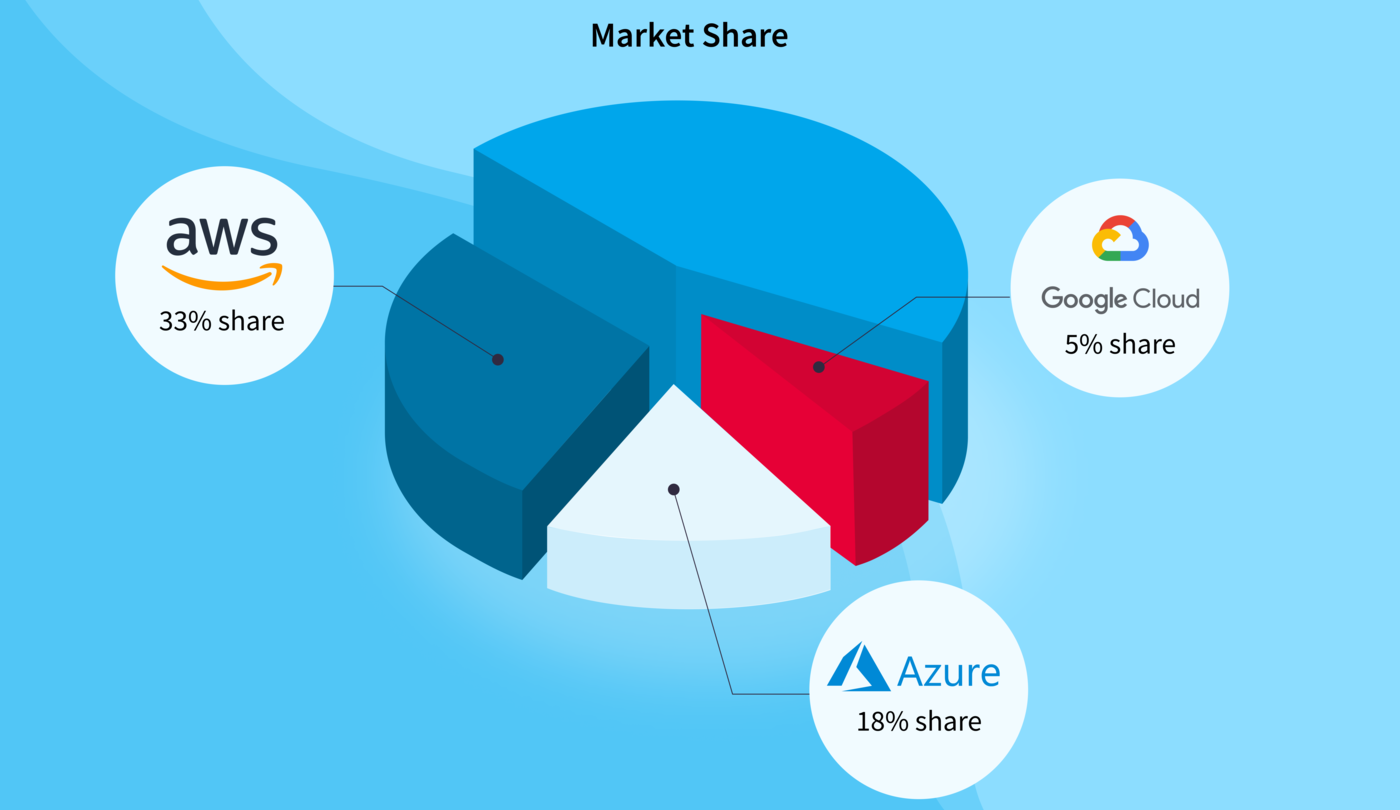
AWS remains the largest cloud provider by market share, with the widest range of available services and the most extensive documentation and community support.
- Best-in-class service breadth, covering nearly every possible cloud computing need
- Largest talent pool, making hiring experienced AWS professionals somewhat easier
- Pricing can get genuinely complex, with costs sometimes hard to predict without careful planning
Picture a company needing dozens of specialized services under one provider — AWS’s breadth tends to cover the widest range of scenarios without needing multiple providers.
Azure: The Enterprise-Friendly Choice
Azure’s biggest advantage comes from tight integration with Microsoft’s existing enterprise ecosystem — Office 365, Windows Server, and Active Directory particularly.
[link to related guide about best free software alternatives here]
- Seamless integration for companies already using Microsoft enterprise tools
- Strong hybrid cloud support for businesses maintaining some on-premises infrastructure
- Enterprise support and compliance features are particularly robust
Google Cloud: Strong for Data and AI Workloads
Google Cloud’s genuine strength lies in data analytics, machine learning, and big data processing, drawing on Google’s own internal infrastructure expertise.
Numbers worth noting: Google Cloud consistently ranks highly in independent benchmarks specifically for data processing speed and machine learning infrastructure, even while trailing AWS and Azure in overall market share.
[link to related guide about machine learning for beginners here]
Pricing Comparison: More Complex Than It Looks
None of these providers offer straightforward, easily comparable pricing — each uses different pricing structures and calculators.
- All three offer free tiers, though limits and included services vary considerably
- Reserved instance discounts (committing to longer terms) can significantly reduce costs across all providers
- Actual cost often depends heavily on specific usage patterns rather than simple published rates
I’d strongly recommend running your actual expected workload through each provider’s cost calculator before committing, rather than relying on general reputation.
Ease of Use and Learning Curve
This varies by individual background and existing familiarity with each ecosystem.
- AWS has a steeper initial learning curve due to sheer service breadth
- Azure feels more intuitive for teams already familiar with Microsoft tools
- Google Cloud’s interface is often described as cleaner and more straightforward for newcomers
[link to related guide about best web development frameworks 2026 here]
Which One Fits Your Specific Situation?
Rather than picking based on general popularity, consider your specific priorities:
- Need the widest range of specialized services? AWS likely fits best
- Already deep in the Microsoft ecosystem? Azure reduces integration friction significantly
- Building data-heavy or AI-focused applications? Google Cloud’s specialized tools often provide genuine advantages
Multi-Cloud Strategies Are Becoming More Common
Some companies now use multiple providers strategically — AWS for general infrastructure, Google Cloud specifically for machine learning workloads, for example. This adds complexity but can genuinely optimize for each provider’s particular strengths.
Suggested image alt text: “Comparison chart showing AWS, Azure, and Google Cloud logos with pricing and service icons”
FAQ
Q: Which cloud provider is cheapest — AWS, Azure, or Google Cloud? A: It varies significantly by specific usage pattern; no single provider is universally cheapest across all workload types.
Q: Is AWS still the best choice for startups in 2026? A: AWS remains a strong general choice, though Azure or Google Cloud may fit better depending on existing tools and specific technical needs.
Q: Which cloud provider is best for machine learning projects? A: Google Cloud is frequently favored for machine learning and data analytics workloads, due to its specialized infrastructure and tools.
Q: Can I switch cloud providers after starting a project? A: Yes, though migration complexity varies significantly depending on how deeply integrated your infrastructure has become with provider-specific services.
Q: Do all three cloud providers offer free tiers? A: Yes, though specific limits, included services, and duration vary — check current offers directly since these change periodically.
Conclusion
The AWS vs Azure vs Google Cloud decision genuinely depends on your specific technical needs, existing tools, and team expertise, more than any universal ranking. Test your actual workload through each provider’s free tier before committing long-term. What’s your project’s primary technical priority — breadth of services, enterprise integration, or data and AI capability? That answer should guide your choice.