
Introduction
I avoided learning about blockchain for years because every explanation I found seemed to assume I already understood cryptography, distributed systems, and half a dozen other complex topics. That’s genuinely unnecessary for a basic understanding. If you’ve been wondering how does blockchain work without wanting a computer science lecture, this breaks it down using plain, practical language — the way I wish someone had explained it to me initially.
The Core Idea Behind Blockchain
Direct answer: a blockchain is essentially a digital record-keeping system distributed across many computers simultaneously, where each new entry (block) is cryptographically linked to the previous one, making the entire record extremely difficult to alter or fake once entries are confirmed.
Think of it like a shared notebook that thousands of people hold identical copies of simultaneously — changing one copy without everyone else noticing becomes practically impossible.
Breaking Down the Word “Blockchain” Itself
The name itself actually describes the structure fairly literally, once you understand the basic components.
- Block: a batch of recorded transactions or data entries
- Chain: each block links cryptographically to the previous block, forming a sequential record
- Together, this creates a continuous, tamper-resistant historical record
Picture a chain of paper receipts where each new receipt includes a unique code derived from the previous one — altering an old receipt would immediately break the code sequence for everything after it.
Why Distribution Across Many Computers Matters
Unlike a traditional database sitting on a single company’s server, blockchain data typically exists across thousands of independent computers (nodes) simultaneously.
- No single point of failure, unlike centralized databases controlled by one entity
- Extremely difficult to alter records without controlling a majority of the network simultaneously
- Transparency, since transaction records are typically visible across the network
[link to related guide about cybersecurity best practices here]
How New Blocks Actually Get Added
This is where terms like “mining” and “validation” come from, and they’re less mysterious than they initially sound.
Numbers worth noting: some major blockchain networks process thousands of transactions per block, with new blocks added at intervals ranging from seconds to minutes depending on the specific network’s design.
- Transactions get grouped together into a proposed new block
- Network participants verify the transactions are legitimate through various consensus methods
- Once verified, the block gets permanently added to the chain, visible to the entire network
Common Consensus Methods Explained Simply
Different blockchain networks use different methods to agree on which transactions are legitimate before adding them.
- Proof of Work: participants solve complex computational puzzles to validate blocks, requiring significant computing power
- Proof of Stake: participants validate blocks based on how much cryptocurrency they’ve committed as collateral, using significantly less energy
- Newer networks increasingly favor Proof of Stake specifically due to lower energy consumption
Blockchain Beyond Cryptocurrency
While cryptocurrency remains the most well-known blockchain application, the underlying technology has genuine uses well beyond digital currency.
[link to related guide about best cryptocurrencies to watch here]
- Supply chain tracking, verifying product authenticity and origin through each stage
- Digital identity verification, reducing reliance on centralized identity databases
- Smart contracts, self-executing agreements that trigger automatically when specific conditions are met
Common Misconceptions Worth Clearing Up
A lot of confusion around blockchain stems from a handful of persistent misunderstandings.
- Blockchain isn’t inherently anonymous — most public blockchains are actually fully transparent, just pseudonymous
- Blockchain isn’t automatically “better” than traditional databases for every use case — it involves genuine trade-offs
- Not all cryptocurrencies function identically, despite sharing underlying blockchain concepts
Is Blockchain Actually Necessary for Every Application?
Honestly, no. Blockchain solves specific problems around trust and decentralization, but it introduces genuine complexity and cost that isn’t justified for every use case. A lot of “blockchain solutions” from recent years have quietly been replaced by simpler, traditional databases once the initial hype settled down.
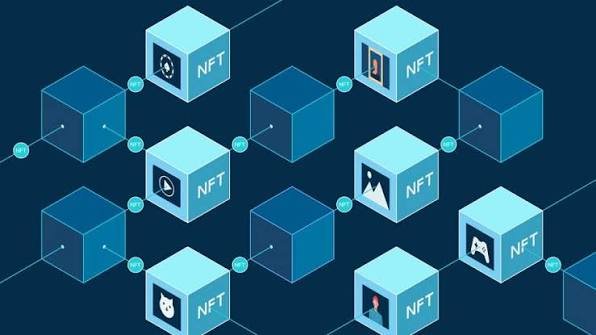
Suggested image alt text: “Simple diagram illustrating how blockchain blocks link together in a chain”
FAQ
Q: Is blockchain the same thing as cryptocurrency? A: No, blockchain is the underlying technology; cryptocurrency is just one specific application built using that technology.
Q: Can blockchain records ever be changed once added? A: Practically speaking, no — altering a confirmed block would require controlling a majority of the network simultaneously, which is extremely difficult on established networks.
Q: Is blockchain technology anonymous? A: Not entirely — most public blockchains are transparent and pseudonymous, meaning transactions are visible but not directly tied to real names by default.
Q: What’s the difference between Proof of Work and Proof of Stake? A: Proof of Work relies on computational puzzle-solving, using significant energy; Proof of Stake relies on committed collateral, using considerably less energy.
Q: Do I need to understand coding to understand blockchain basics? A: No, the core concepts are understandable without any coding knowledge — coding only becomes relevant if you want to build blockchain applications yourself.
Conclusion
Understanding how does blockchain work doesn’t require a computer science background — just grasping the core idea of a distributed, tamper-resistant shared record. From here, exploring specific applications like cryptocurrency or smart contracts becomes considerably easier to follow. Which specific blockchain application are you most curious about exploring further?